The Frida Kahlo Edition: painting into sculpture, twice removed
August 2026 · The Venustare Curation Desk · 3 min read
A self-portrait only has one face. A sculpture of one has to survive being seen from behind.
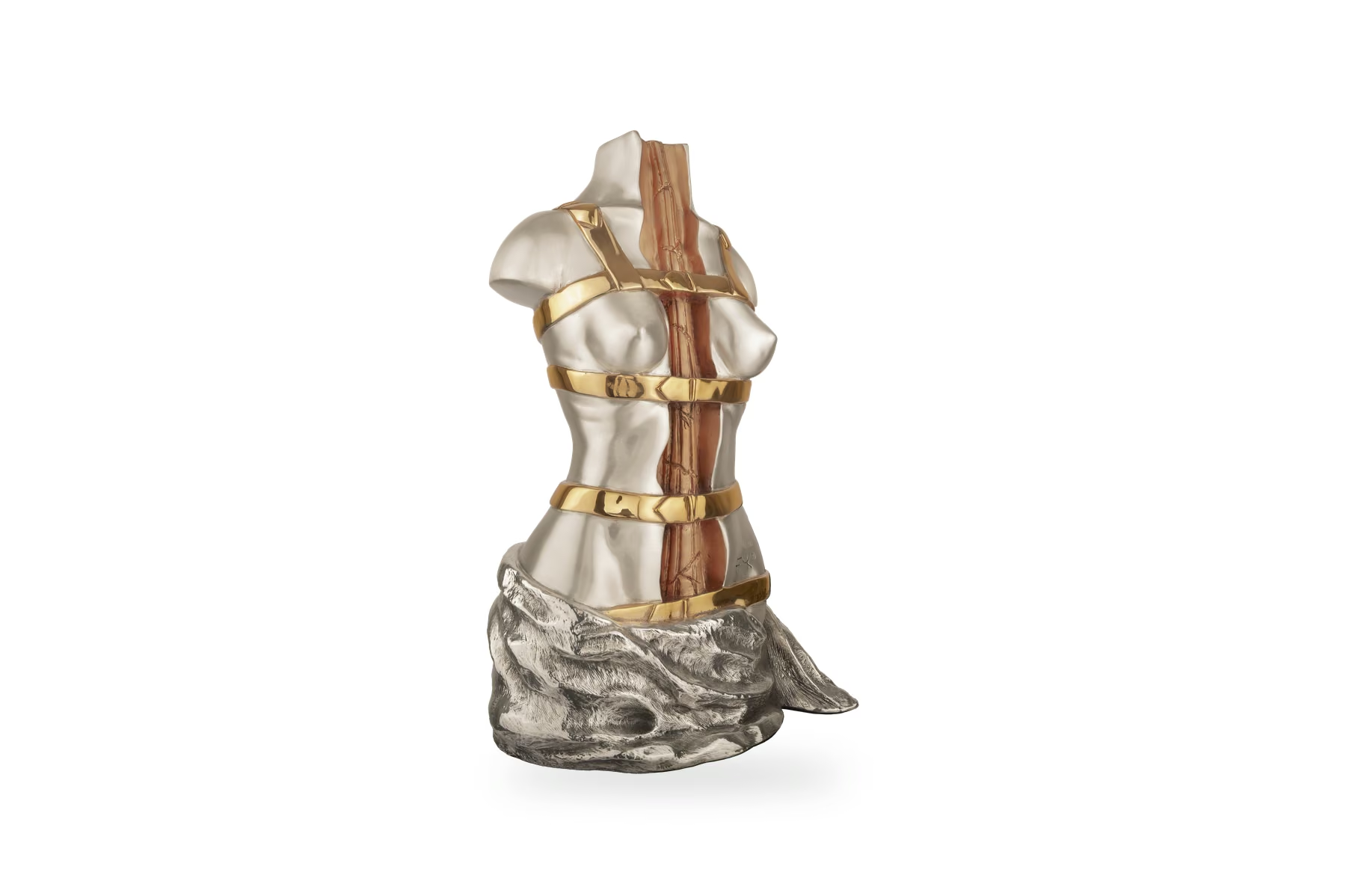
Frida Kahlo painted almost exclusively in two dimensions, and to a remarkable degree she painted herself: roughly a third of her output is self-portraiture, a body of work built around one fixed vantage point, the artist meeting her own eyes in a mirror. That makes her among the hardest painters to carry into sculpture, harder in some ways than Dalí, whose melting watches and lip-shaped sofas were at least imagined as things. A Kahlo self-portrait must be reinvented with a back, a profile, and a silhouette she never painted before it can exist as anything more than a plaque.
The officially licensed Frida Kahlo collection works from her most recognized images and motifs, The Broken Column above all, painted in 1944 in the aftermath of spinal surgery, and rebuilds each one as a freestanding figure modeled fully in the round. The broken Ionic column that stands in for her shattered spine, the straps that hold the torso together: on canvas these read as symbols. In sculpture they have to work as structure too, which is its own quiet commentary on a painting that was always about holding a body upright.
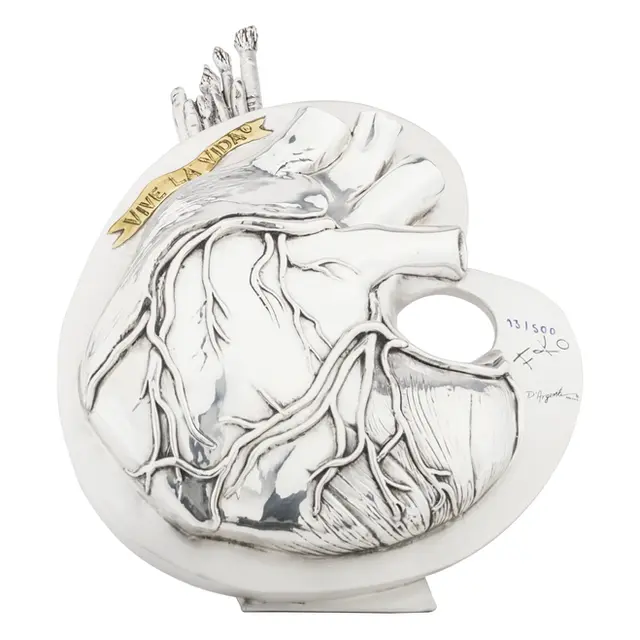
Other pieces in the edition step around the painting problem entirely by starting from objects she owned rather than images she made: vases and small works drawn from jewelry documented in her personal collection, rendered in gold, silver, and green jade finishes. These are translations of a gentler kind, an already three-dimensional thing remade in a nobler material, and they sit in the collection as the counterweight to the self-portraits: one approach builds a body from an image, the other changes the material of a body that already existed.

Both approaches answer to the same discipline that governs the Dalí Edit, and it is the reason both editions stay deliberately small. Every angle has to hold up on its own terms, not merely imply the famous one. Expanding either collection to cover every recognizable image in the artist's catalog would mean accepting pieces that are right from one side, and that is exactly the compromise the licensing, and the house, exist to refuse.
Every piece ships with its licensing documentation alongside the certificate of authenticity. What that paperwork really certifies, beyond provenance, is the harder claim underneath: that someone looked at a painting with a single face and decided, stroke by stroke, what the other three sides should be, and got it right enough that the piece still reads as unmistakably hers from anywhere in the room.


Further Reading
More from the Journal
July 2026
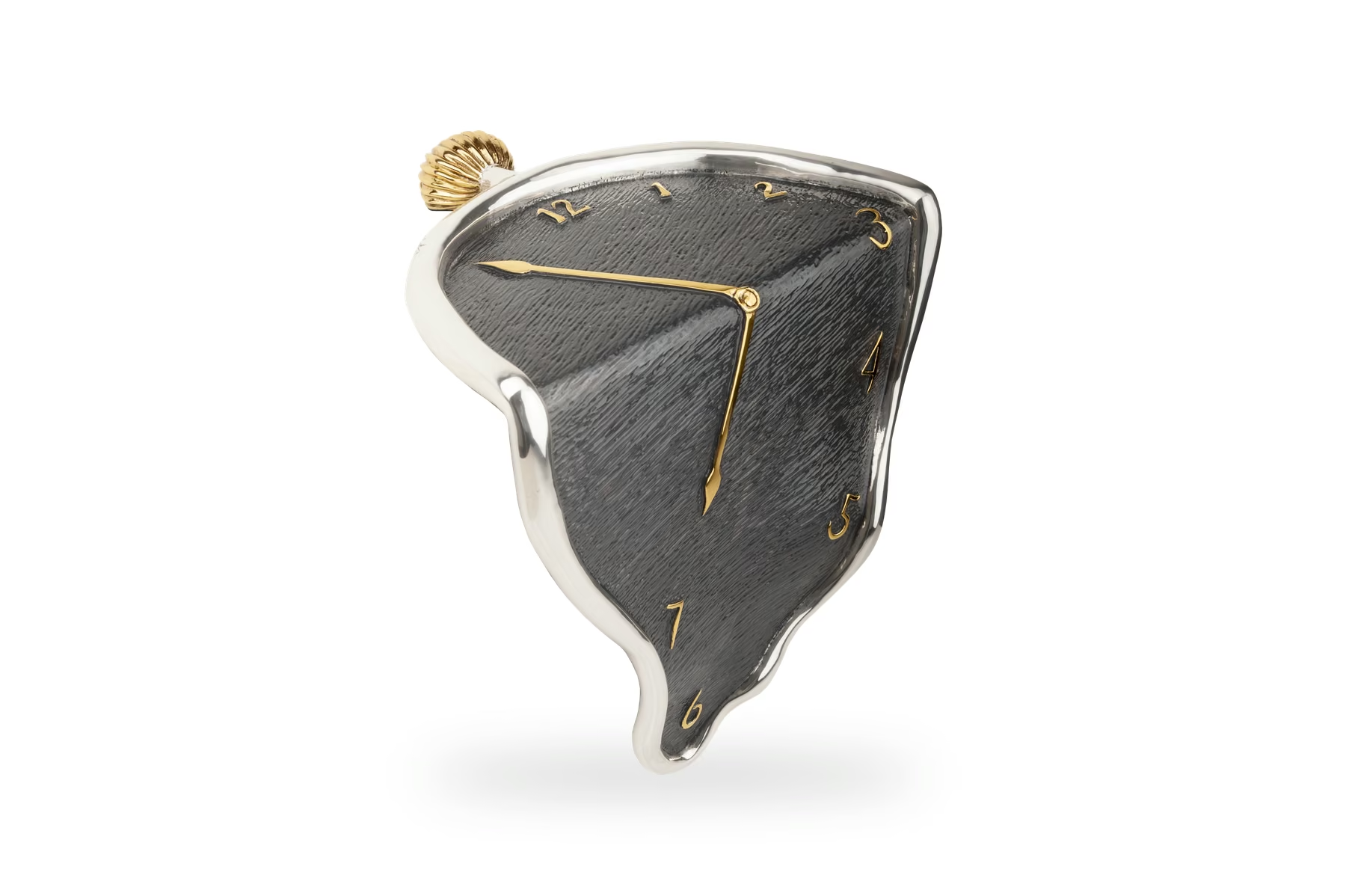
How a Dalí painting becomes a silver object
Inside the licensing and finishing discipline behind the Dalí Edit, and why translating a two-dimensional illusion into sculpture is the hard part.
August 2026
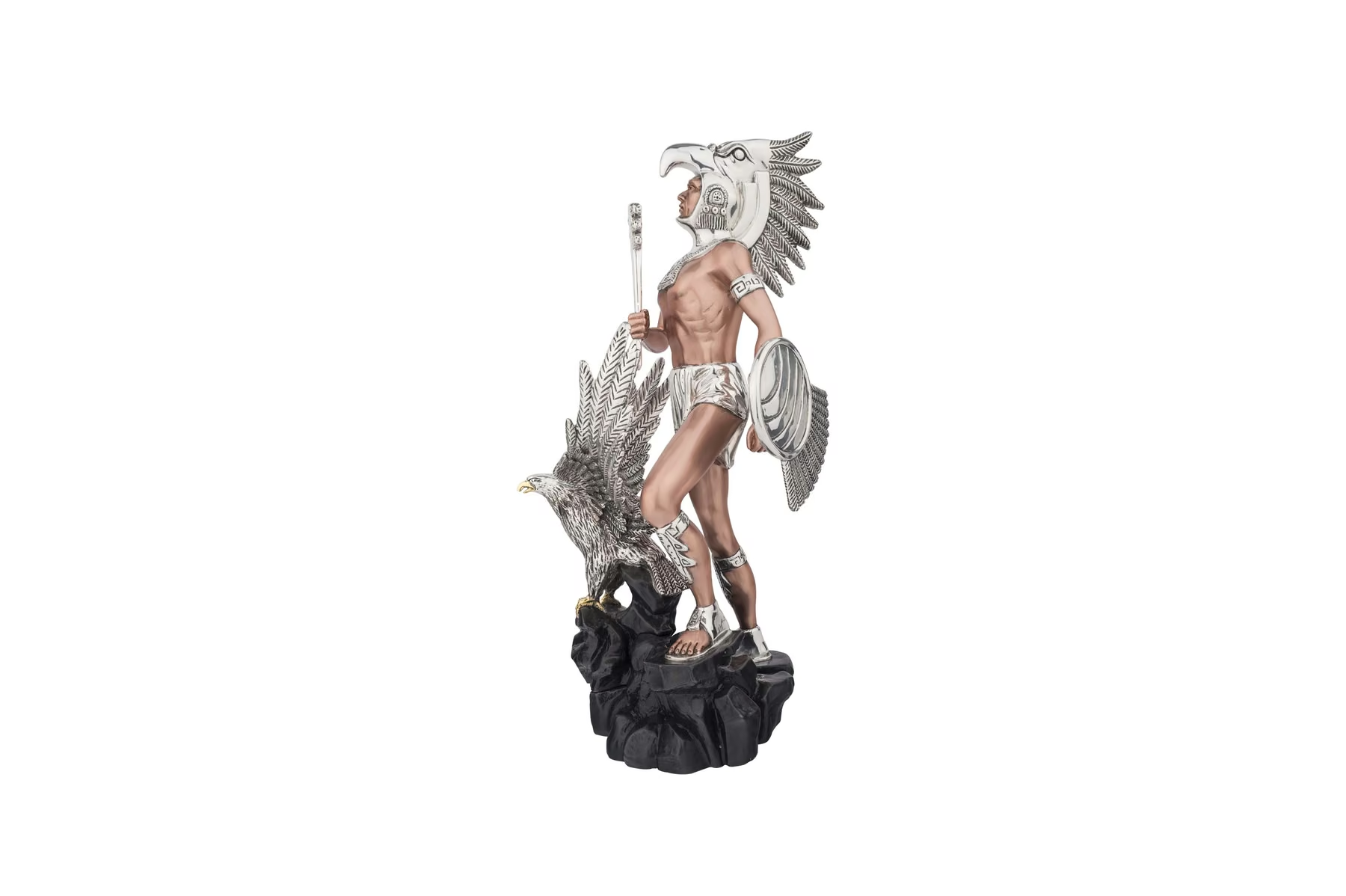
How Mexico became the world's silver capital, and where D'Argenta fits
Taxco spent forty years turning Mexico into the country the world associates with fine silver work. D'Argenta belongs to the generation that inherited that standard.