Reading the Aztec and Maya imagery in the collection
August 2026 · The Venustare Curation Desk · 3 min read
The calendar stone was never a calendar in the way the name suggests. It was a monument, meant to be read as one.
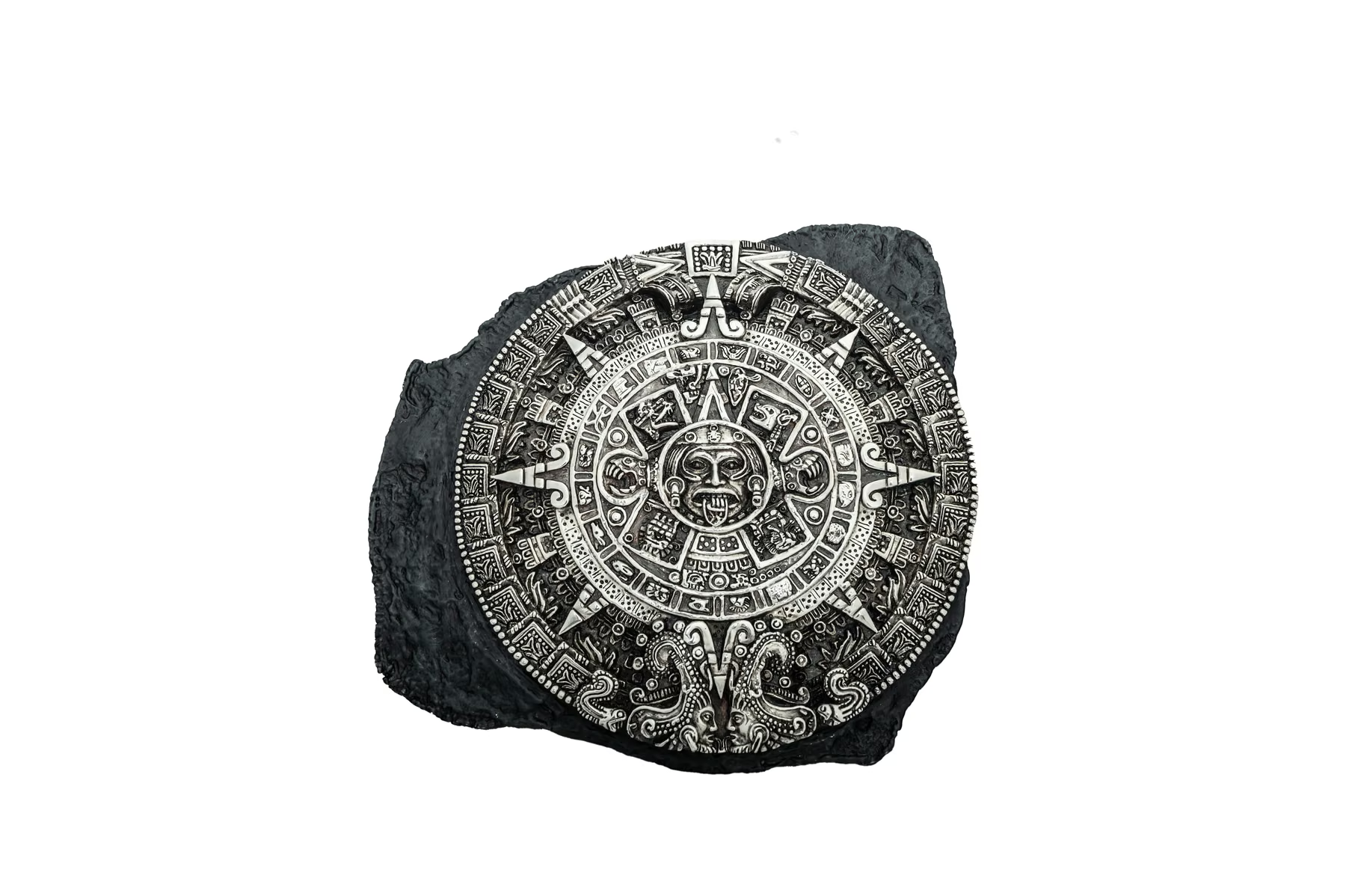
A meaningful share of the collection draws on Aztec and Maya sources: eagle and jaguar warriors, replicas of the so-called Aztec Calendar, the figure of Cuauhtémoc, the last Aztec ruler, and the reclining form known as Chac Mool. None of it is decoration borrowed at random. Each subject traces to a specific, documented original, and knowing what that original actually was changes what the object on your shelf is doing. These are not motifs. They are citations.
Take the eagle warriors. They were not generic soldiers with a bird theme; they were a named military order within Aztec society, closer to a knighthood, whose members were expected to embody the animal that gave the order its name. A sculpture of an Eagle Knight depicts a rank and the discipline behind it. The Sun Stone, likewise, earns its calendar nickname from the ring of twenty day-signs carved around its center, but the original, a basalt monolith of some twenty-four tons unearthed beneath Mexico City's main square in 1790, was almost certainly ceremonial: an image of the Aztec cosmos with the sun at its center, a universe to be read, not a timepiece to be consulted.

Chac Mool is the strangest case, and the most honest about its own mystery. The reclining figure, head turned sharply to the side, a vessel held flat on the stomach, appears across Toltec and Maya sites alike, and even its name is an invention, coined by a nineteenth-century explorer rather than inherited from any ancient language. Archaeologists broadly agree the vessel received offerings at temple thresholds and agree on little else. A silver rendering does not settle that debate. It does something better: it keeps a genuinely ancient, genuinely unresolved image in circulation as an object rather than a caption in a textbook.

It matters, we think, that these pieces are made in Mexico, by Mexican hands, in a workshop tradition that has treated this imagery as its own inheritance for a century. The same forms rendered elsewhere would be quotation. Rendered here, they are continuity.
None of this changes how a piece should be chosen, which remains a question of scale, finish, and what the object does in your room. But knowing that the calendar is really a cosmos, that the Eagle Knight is a rank and not a bird, that Chac Mool is a riddle nobody has solved, is the kind of thing we would rather hand you outright than have you discover was missing after the piece was already on your shelf. An object this old deserves to be introduced properly.


Further Reading
More from the Journal
August 2026
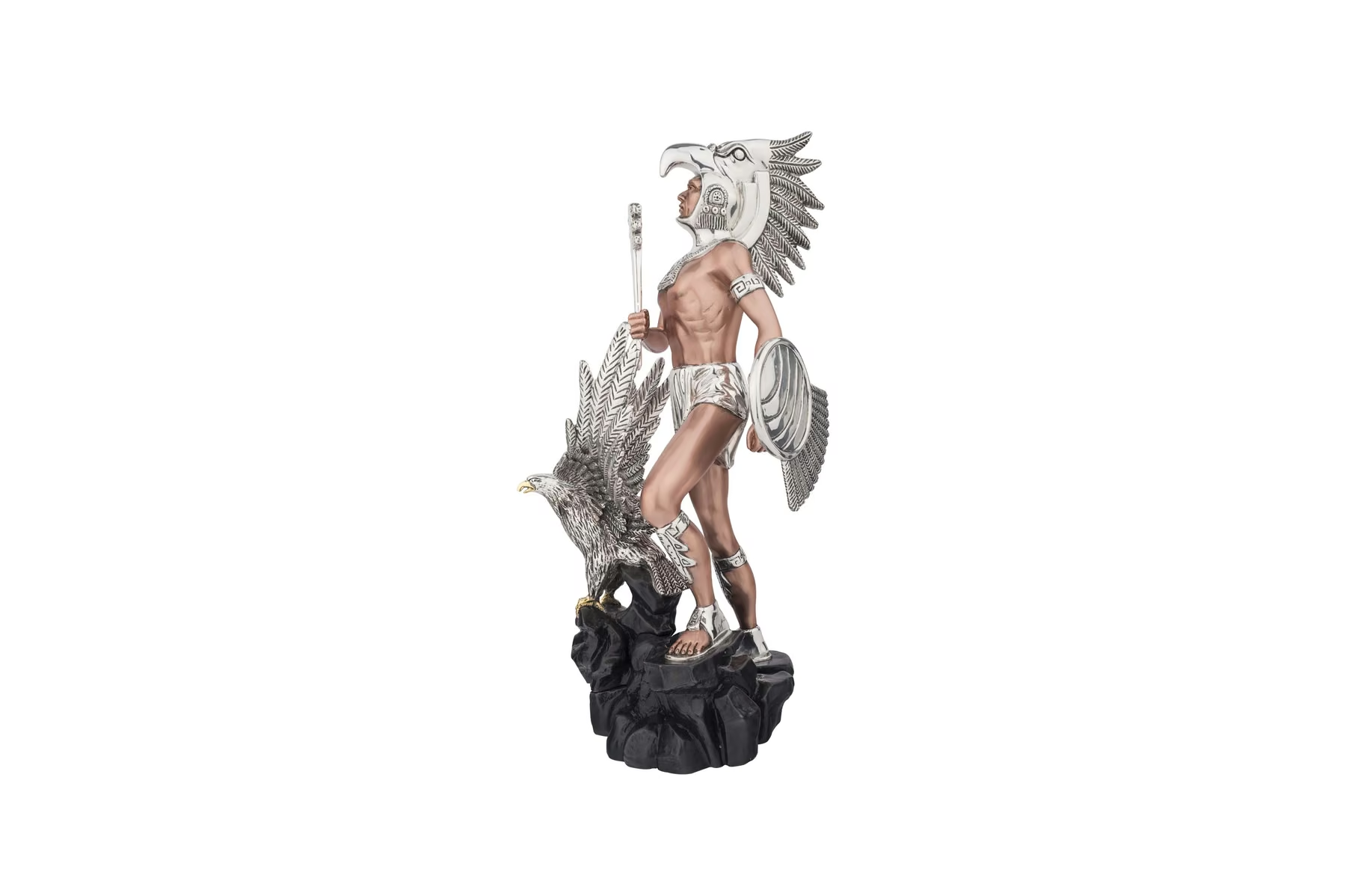
How Mexico became the world's silver capital, and where D'Argenta fits
Taxco spent forty years turning Mexico into the country the world associates with fine silver work. D'Argenta belongs to the generation that inherited that standard.
August 2026
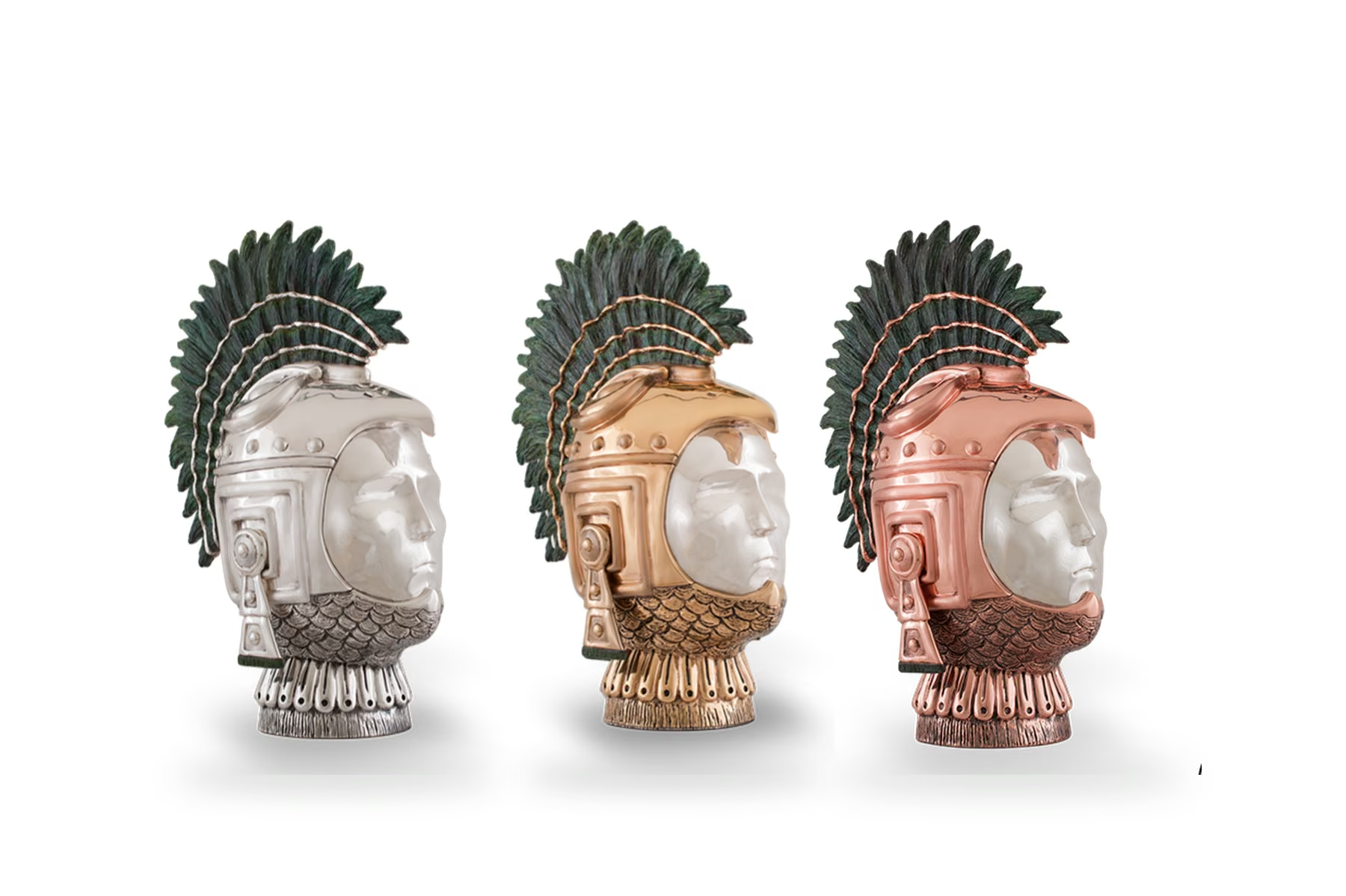
Caring for silver, gold, and copper sculpture
What actually tarnishes, what does not, and the short list of habits that keep a finished piece looking the way it did the day it arrived.