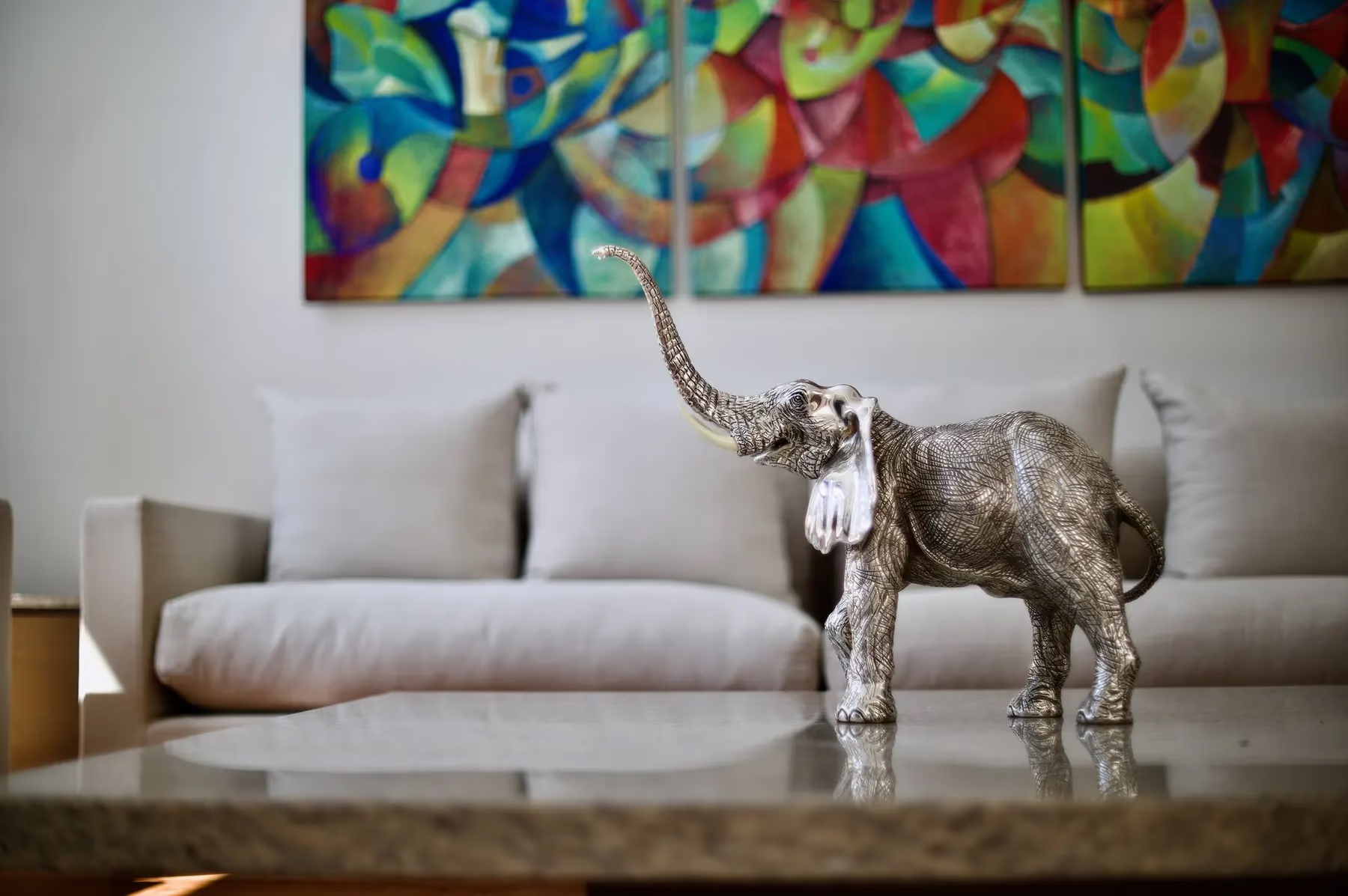
The metal does not compete with the color; it frames it.
A saturated painting already gives a room its strongest charge. Add another object that asks for attention through color, and the two start an argument that rarely ends well for either. Silver settles it. It returns the light of the room without adding a hue of its own, so the pigments on the canvas stay the focus while the metal sits beside them as a calm counterweight. In a room with bright art, a silver figure is less a second statement than the pause that lets the first one land.
We often see people try to match an object to the painting's palette, a red vase under a red canvas, and the result flattens both. Let contrast do the work instead. A bright abstract and a cool, reflective figure set up a useful tension: the eye moves between the matte, brushed surface of the paint and the liquid sheen of the metal, and keeps moving. The two support each other through difference, not resemblance, and neither ends up looking like an accessory to the other.
A glass or stone table changes the arrangement. Glass lets the eye pass under the figure, so the piece seems to float; polished stone reflects it, and you get a second, softer image of the form beneath the first. Plan for that reflection rather than discovering it. A figure that is too large doubles into visual noise. One that is well scaled gains depth from it, with the reflection adding light to the lower half of the arrangement and grounding the piece on the table.
Scale sets the hierarchy. Next to large artwork, the sculpture should be clearly smaller than the painting, so the wall keeps its role as the anchor and the figure reads as its companion. A tall piece in front of a canvas turns the arrangement into a contest. As a working rule, we keep the figure's height well under that of the painting behind it, and we leave the canvas uncrossed at eye level, so that a person standing in the room sees all of the art and the figure together, not one blocking the other.
A single gesture can link the two without any color matching at all. A raised trunk, an extended arm, a lifted head turned toward the canvas draws a line from the object to the painting, and the eye follows it. The Silver Elephant Mother Figurine Trunk Up does exactly this: the trunk rises and points, and placed with the painting on the side it points to, it ties the table to the wall. The effect is quiet but deliberate, as if the figure has noticed the art, and it makes the two read as one arrangement.

Before you place the piece, look at what surrounds it. Neutral upholstery lets both the painting and the silver breathe; a busy pattern or a saturated fabric on the sofa behind the table will compete with both and muddy the contrast you are relying on. Check the arrangement from where people sit as well as from the doorway, and at the time of day the room is used most. If the furniture is loud, choose a quieter spot for the figure. The arrangement works only when the setting around it is calm.
Shop This Story
Featured in this piece


Further Reading
More from the Journal
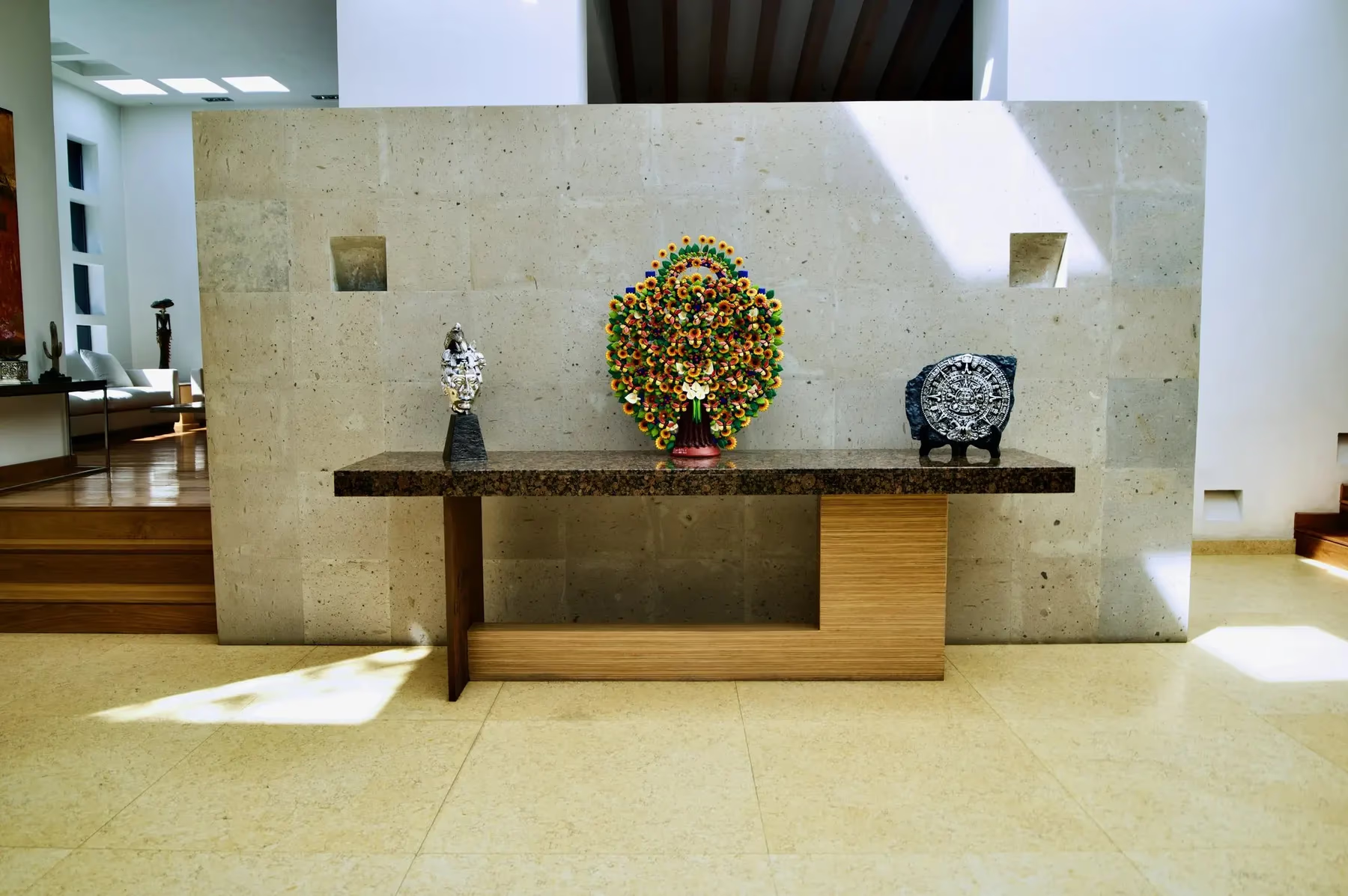
July 2026
Styling a console with one serious piece
The rule professional stylists swear by: one object with presence beats five without it. A working guide to scale, finish, and negative space.
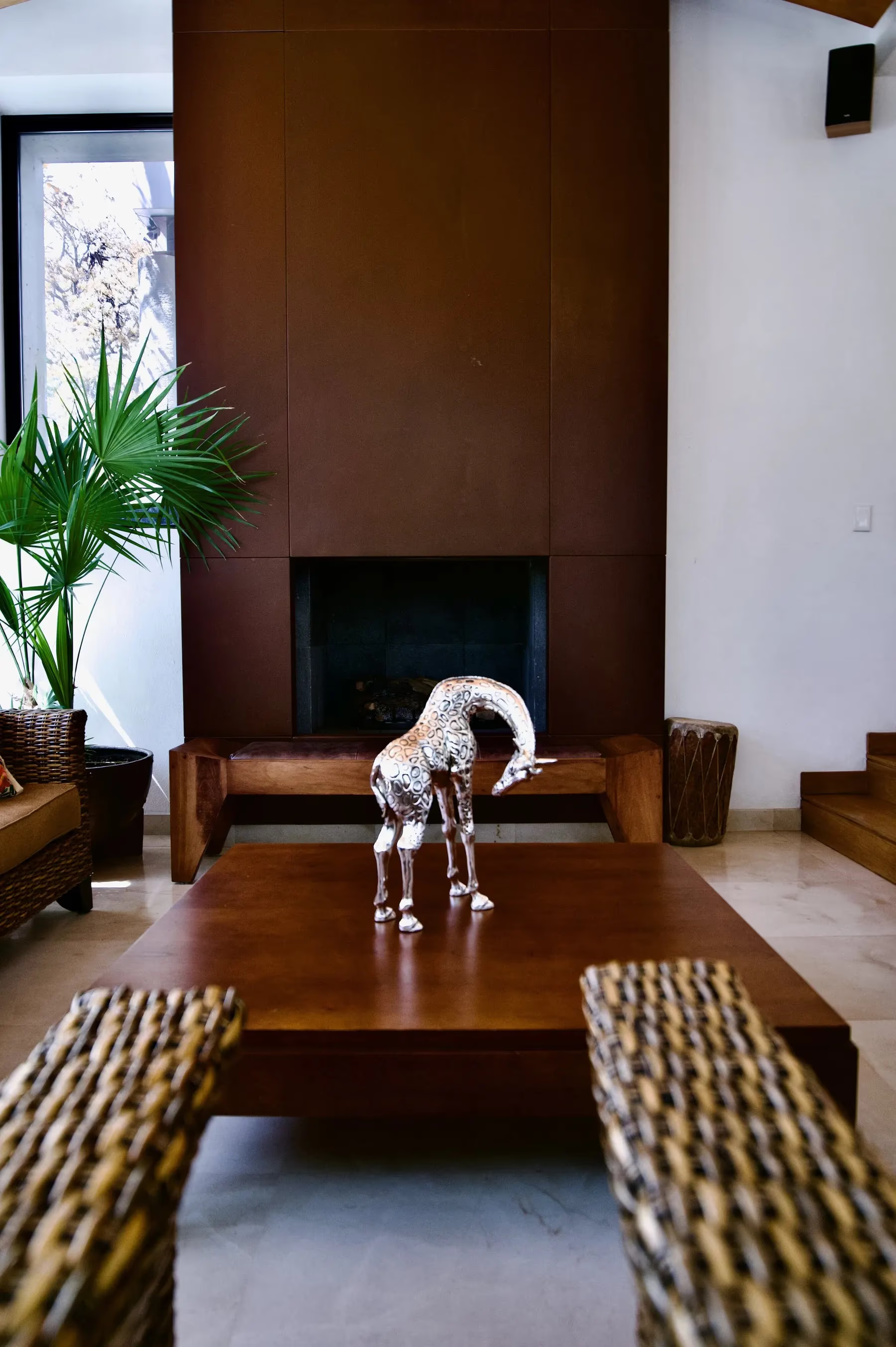
October 2026
Living with sculpture in the room you sit in
A coffee table is seen from above and a fireplace is a dark frame. How to choose and place a piece for the room where people actually live.