The two-second rule for a hall or landing
October 2026 · The Venustare Curation Desk · 4 min read
A figure in a passage has only a moment to speak, so its outline has to carry from the doorway.
Most people treat a hall as a corridor, but it is closer to a stage that everyone crosses and nobody sits in. A guest does not stop to study a piece there. They pass it carrying a coat, talking to their host, glancing at the stairs. The object has to register at once. If a design depends on fine surface work or small details, the eye will miss it at walking pace. We look for forms that hold their shape from a distance, because the silhouette is the first thing anyone reads, and it has to stand clear of the wall behind it.
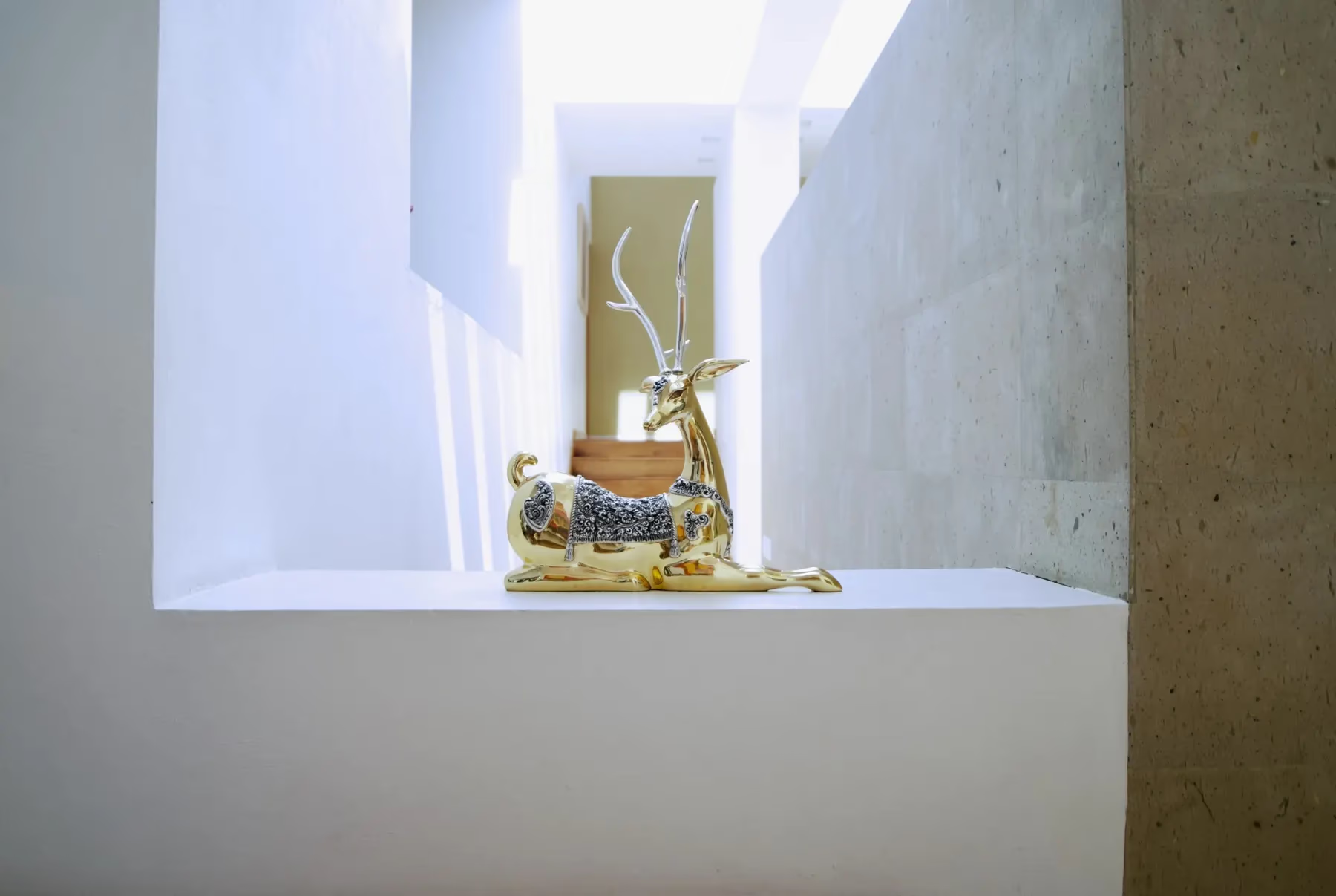
Light in a stairwell or on a landing is directional and it moves. It falls from a window above or a fixture to one side, and it draws hard highlights and deep shadows. A metal finish does not soak that light up; it sends it back. The result is a brief flash that catches the edge of vision of anyone walking past, and that flash is often what makes a person turn their head. Chosen well, a piece uses the light of the space as part of its own presence, and looks different at nine in the morning than at five in the afternoon.
Placement matters more in a narrow space than anywhere else in the house. Give the figure clear air on both sides. Pushed against a wall or a railing, it looks trapped, and the eye has no path around it. Set it at eye level or just below, which is where a walking person already looks, so the piece meets them without asking them to crane up or peer down. A plain ledge and a plain wall behind it are an advantage, not a compromise. The figure should feel like company on the way through, never an obstacle in it.
The Resting Gold Thai Deer Statue shows the principle well. Its form is low and long, so it sits along a ledge rather than fighting the vertical lines of a stair. The gold catches daylight from a window, and the worked silver saddle gives the mass a second tone so it does not read as a single block. From the approach, the outline is unmistakable: head raised, antlers up, body at rest. It does not ask for attention through complexity. It holds it through a clear shape and the right scale for the ledge it sits on.

A vertical piece works differently. The Silver Thinker Sculpture is an abstract form of polished curves on a dark base, and it draws the eye upward, which suits a landing with headroom or the turn of a stair. Silver reads cooler than gold and returns light more softly, so it settles well into a quieter corner of the hall. What it shares with the deer is a strong profile: the sweep of its curves is legible from across the space, which is the whole requirement of a piece that is seen in passing.

Before you buy, walk the route you take every day. Stand where you first come into the hall and look at the ledge or niche you have in mind. Can you read the outline from there, at walking pace? Does daylight reach it at the hours you usually pass? Is there clear air on both sides, or will it share the space with a lamp or a pile of post? If a piece would disappear into the background from the approach, it is the wrong piece for that spot. If it catches your eye in the first two seconds, it will hold it for years.
Shop This Story
Featured in this piece


Further Reading
More from the Journal
July 2026
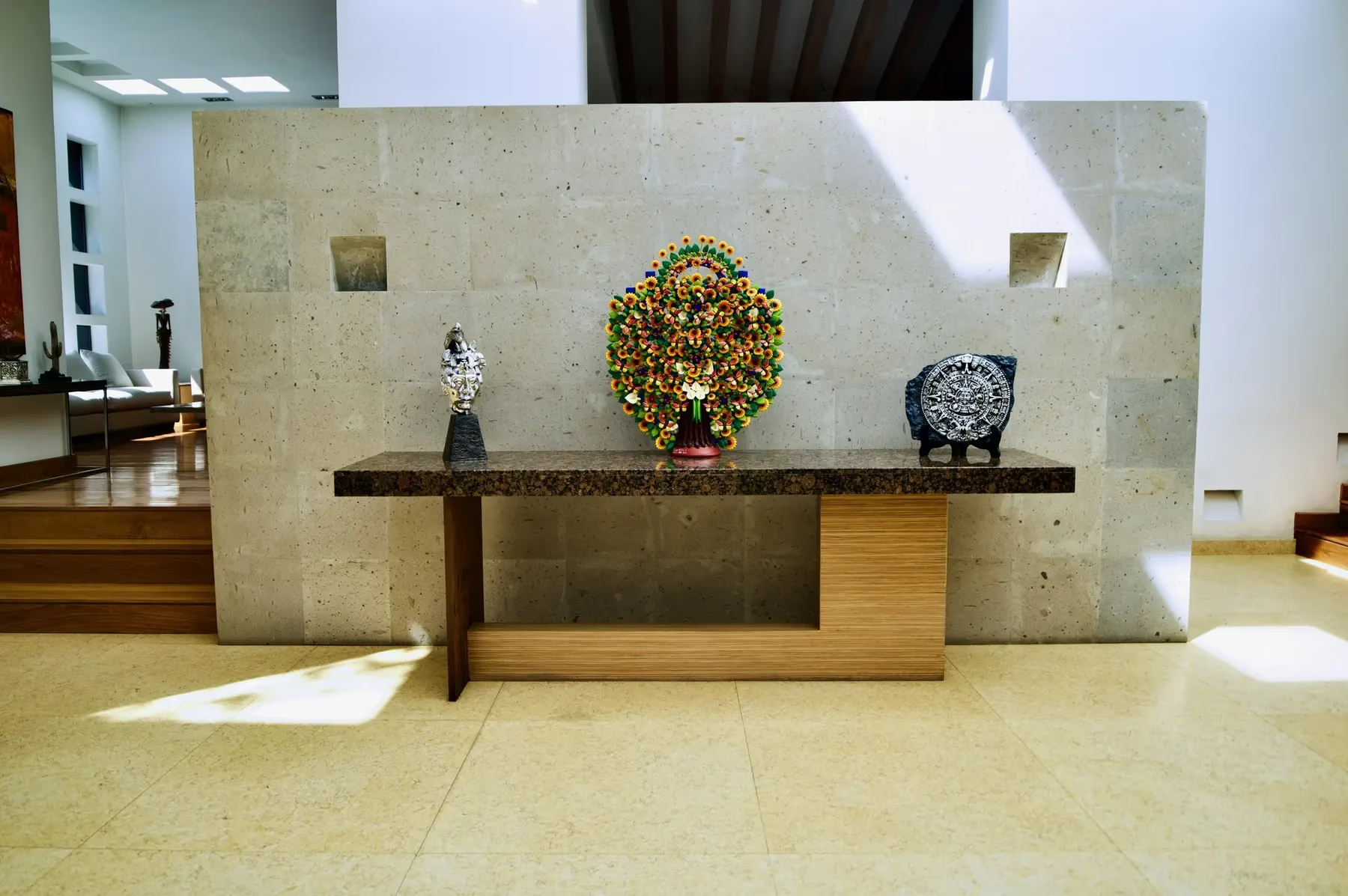
Styling a console with one serious piece
The rule professional stylists swear by: one object with presence beats five without it. A working guide to scale, finish, and negative space.
October 2026
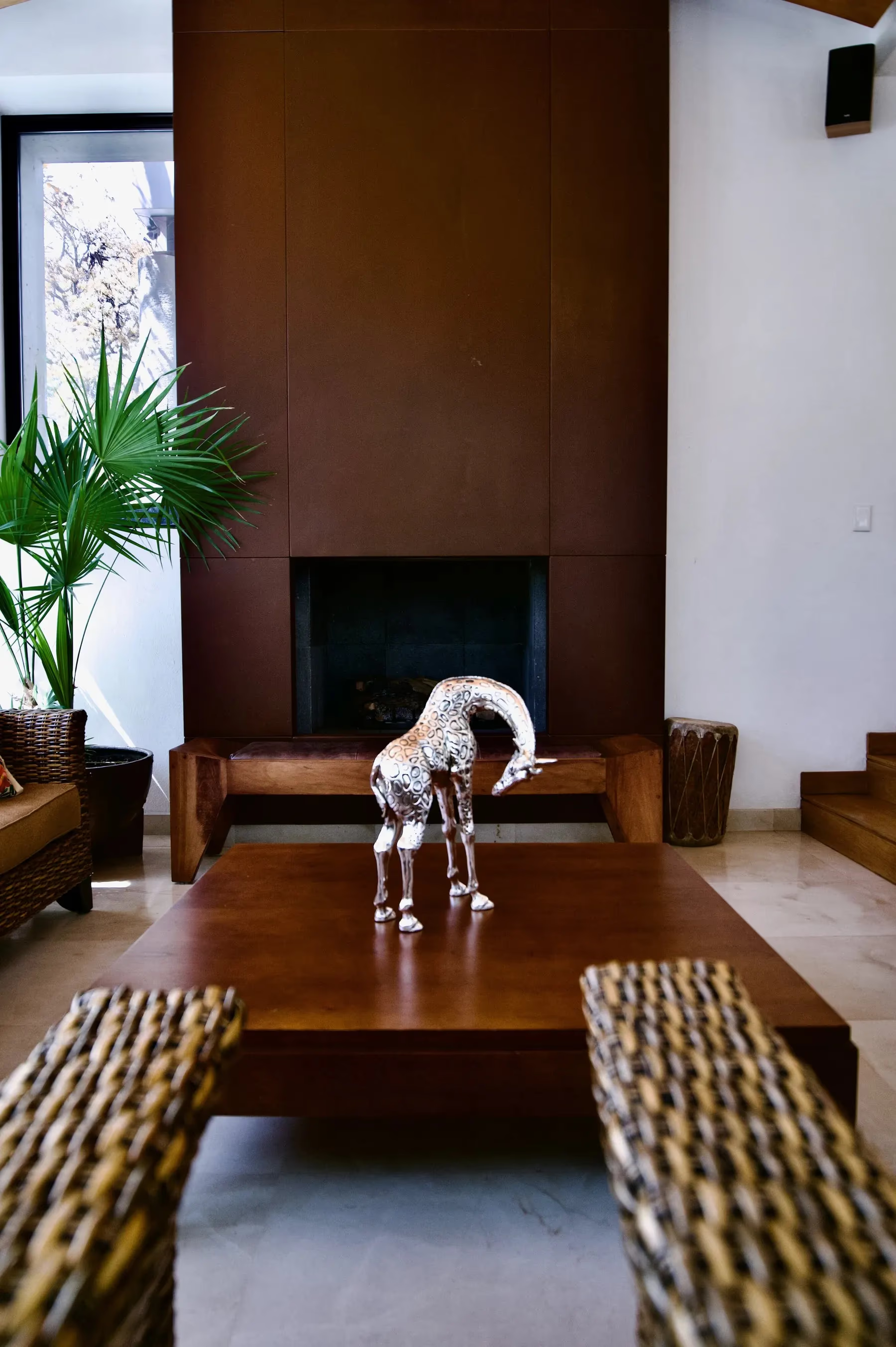
Living with sculpture in the room you sit in
A coffee table is seen from above and a fireplace is a dark frame. How to choose and place a piece for the room where people actually live.